Sophia and Moppy’s relationship
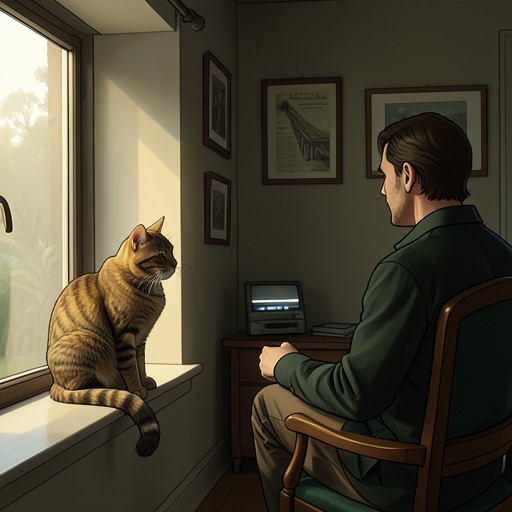
The Summer BookSophia and Moppy’s relationship turns on the distance between affection offered and affection returned. From his arrival as a dependent kitten to his eventual return after a temporary exchange, Sophia tries to draw him into companionship, while Moppy follows his own habits and remains largely apart. The relationship brings her delight, frustration, anger, and longing without resolving into the easy intimacy she hopes for.
A kitten brought close
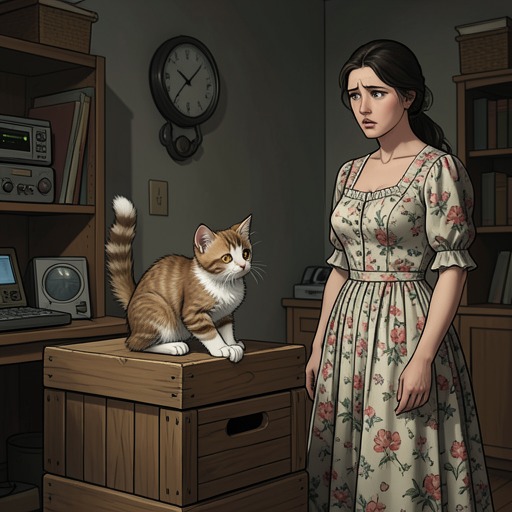
Moppy arrives as a tiny kitten that can drink only from a nipple. The family finds Sophia’s baby bottle in the attic and uses it to feed him. He first sleeps in a tea-cosy for warmth; once he can walk, he is given a place in the cottage, in Sophia’s bed, with his own pillow beside hers. His first weeks make him dependent on human care and place him physically close to Sophia, but this closeness does not become a lasting pattern of mutual attachment.
As he grows, Moppy leaves the cottage and chooses the house instead. At night he sleeps beneath the bed in the box used for dirty dishes. Sophia carries him back and tries to win his affection, but he repeatedly returns to the box. When dishes accumulate, his howling brings someone to wash them: even this inconvenient routine is organized around a preference he asserts for himself. His name is Ma Petite, though the family calls him Moppy, and his independence is apparent early.
Sophia makes repeated efforts to include him in the pleasures she imagines a cat might share. She carries him to pleasant places, hugs him, and confides secrets. Moppy responds with brief glances, polite endurance, or an averted gaze before withdrawing to the dish box. Food and sleep appear to hold more interest for him than her overtures. Sophia recognizes the imbalance and describes love as something that can be given without being returned; she nevertheless decides to keep loving him more insistently. The relationship’s central tension is present from the start: she treats attention as a bridge between them, while he does not respond as though he needs that bridge.
Pursuit, frustration, and hunting
Week after week, Sophia pursues Moppy with soft speech, comfort, and attempts at understanding. On a couple of occasions, she loses patience, shouting at him or pulling his tail. Moppy hisses and runs beneath the house; afterward he eats and sleeps, returning to his own routine rather than seeking reconciliation. The narrative places her forceful pursuit beside his continued withdrawal, showing that increased attention does not produce the affection she wants.
The strain becomes more consuming for Sophia: she stops playing and begins having nightmares, unable to think about much besides the cat who will not be affectionate. Moppy, meanwhile, grows into a lean, wild animal. One June night he does not return to the dish box. The following morning he comes into the house, stretches, sharpens his claws on a rocking chair, and goes to sleep on the bed. His calm, self-directed behavior contrasts with Sophia’s preoccupation; his return indoors does not signal that he has become more responsive to her.
Moppy’s hunting makes the difference between their outlooks harder to ignore. He begins bringing birds into the house, and Sophia reacts with alarm and dismay. Grandmother points out that a wild cat does not distinguish, as Sophia does, between animals she considers objectionable and birds she likes. Sophia resolves not to speak to Moppy for three days and carries out that decision. The silent treatment gives expression to her anger, but it does not change his behavior: he continues hunting and bringing his prey home.
The repeated morning encounters make the dispute part of daily life. The birds are taken away, and Sophia asks whether the remains have been cleared before coming inside. She also confronts Moppy about the blood and the number of animals he has caught. Her punishment deepens her own distress, and morning coffee loses its former ease. Later, Moppy learns to conceal the evidence of his hunting. Grandmother discovers a row of picked-clean bird skeletons beneath a lifted veranda plank, confirming that the hunting has continued even when it is no longer visible. When Moppy rubs against her leg, she draws away and rebukes him under her breath. The untouched cat dish attracts flies, another sign of how far the animal has moved from the domestic routine Sophia once tried to establish.
Distance and the arrival of Fluff
Moppy becomes wild and rarely enters the house. His coloring blends with the island’s pale, striped stone, and his movements through the landscape are described as difficult to follow: he watches from the thicket, disappears beneath the pines, and spends time alone. He washes in the sun, rolls on warm rock, eats grass, and sleeps. The account presents him not only as the object of Sophia’s feelings but as an animal with a life that remains largely outside human knowledge. He is described as happy, but he shares little with anyone.
A visit by the Övergårds brings Sophia into contact with a contrasting kind of cat. In their boat, among bags, jerry cans, and baskets, she finds a large white cat that licks her hand and continues purring when she lifts it ashore. Anna Övergård explains that the cat, Fluff, is not a mouser and that they intend to give him to friends. Sophia holds him on her lap; he continues to purr and is soft, warm, and submissive. The contrast with Moppy is immediate: Fluff accepts the handling and closeness Sophia has repeatedly sought from the other cat.
The exchange is arranged easily and sealed with a bottle of rum. Moppy is captured and does not understand what is happening before the Övergårds’ boat has left for town. Fluff moves into Sophia’s cottage, eats fish, welcomes petting, and sleeps in her arms each night. In the morning he joins coffee and sleeps beside the stove; in sunshine he rolls on the warm granite. Sophia does not treat the new cat as an uncomplicated replacement, however. When Fluff settles in Moppy’s customary place, she carries him elsewhere and insists on preserving that spot for Moppy. Her care for Fluff therefore exists alongside an attachment to the absent cat and to the place he occupied.
The storm and the exchange back
The summer becomes a long succession of calm, blue days, and Fluff sleeps beside Sophia’s cheek. Sophia remarks that good weather can become boring. Grandmother connects this preference for storms with Sophia’s grandfather, but Sophia leaves before she can hear more. During the night the wind rises, and by morning a strong southwesterly wind is throwing foam over the rocks.
Sophia wakes Fluff and urges him to respond to the storm. He stretches and remains comfortable in bed. When she shouts at him to get up, his continued stillness makes her furious; she throws him out into the wind and tells him to hunt, then begins to cry and runs to Grandmother. The episode shows the limit of the substitute relationship. Fluff has offered the warmth and docility that Moppy withheld, but he does not meet Sophia’s expectation that a cat should answer the weather with wildness and action. Her outburst is followed by a clear admission: she wants Moppy back.
Grandmother cautions her that life with Moppy will be difficult again. Sophia acknowledges that it will be awful, but says that Moppy is the cat she loves. They exchange the cats once more. The return does not erase the hunting, distance, or frustration that defined their earlier life together; instead, Sophia chooses the relationship with full awareness that its difficulties will continue. Moppy’s independence remains intact, while Sophia’s attachment proves stronger than the comfort of being readily petted. The relationship’s resolution is therefore not a transformation into mutual affection, but Sophia’s acceptance that loving Moppy does not depend on his becoming the kind of companion she first wanted.